
Shaping the next generation of lentils and faba beans
Dr. Ana Vargas (PhD) is bringing fresh energy and perspectives to the development of some of Saskatchewan’s most important pulse crops.
By Delaney Seiferling for AgKnowledgeDr. Ana Vargas (PhD) only stepped into her current role as the head of the lentil and faba bean breeding program at the University of Saskatchewan’s (USask) Crop Development Centre (CDC) a year and a half ago.
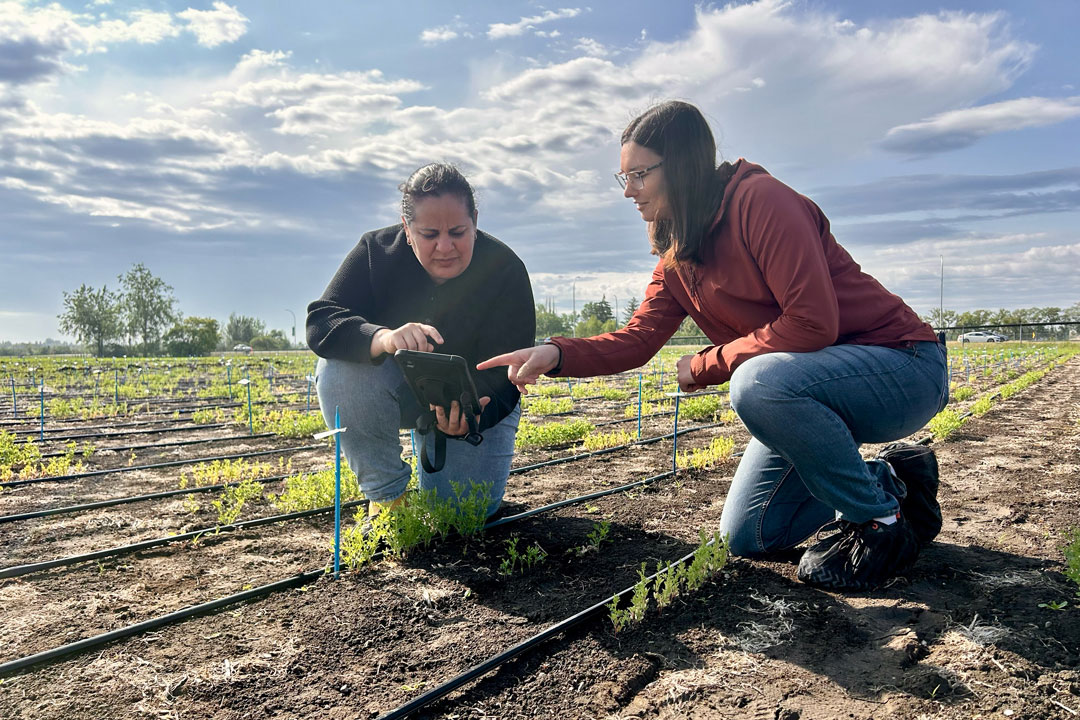
But she already has a favourite part of the job—going out in the fields surrounding her office first thing on summer mornings and looking over her plots while drinking her coffee.
“It's basically seeing your whole year of efforts, because everything we do throughout the year is just to get to that very important moment. It’s just very special,” said Vargas, the Agri-Food Innovation Fund Chair, Lentil and Faba Bean, at USask.
These crops represent not only the hard work of breeders like Vargas, they also represent a cornerstone of the Saskatchewan and Canadian economy. Our province grows more than a third of the world’s lentil supply, while the provincial pulse industry is valued at about $6.3 billion annually.
The strength of this sector simply wouldn’t be possible if farmers did not have access to new and improved pulse varieties each year. And Vargas’ job is to ensure they do, by prioritizing and balancing the needs of farmers—developing crop varieties that are adapted for growth in Saskatchewan’s conditions, resilient to changing weather patterns, responsive to global market, and are safe, nutritious, affordable and innovative.
She does all this by spending countless hours in the lab, using a combination of new technology and traditional breeding methods to generate new varieties of lentils and faba beans that will offer marked improvements over previous ones.
And she’s made much progress in doing so in her short time on the job. In the last year, seven new lentil varieties from the CDC program have been approved for registration, which means they are one step closer to being planted in farmers’ fields.
Vargas says she is proud of all seven varieties, as they all offer marked improvements over previous ones— including increased resistance to some of the most noxious diseases plaguing Saskatchewan pulse crops at the moment and improved marketing traits, such as shapes and colours that make them easier to get to end markets. For example, one new small red lentil variety is much rounder then previous versions, which will make it much easier to process.
“It’s probably going to be at least 20 per cent more efficient for dehulling than the previous [standard],” she said.
The program has also bred new varieties of black lentils with improved seed quality. Previously there was only one variety available—Indianhead— developed as a legume cover crop.
“We have a lot of new findings showing why black lentils are better agronomically and for processing,” Vargas said, adding they also believe the black colour adds additional protection against root rot (a disease which has cost Saskatchewan farmers billions of dollars in losses in recent years). She believes the colour could also be appealing to end users for aesthetic purposes.
Beyond lentils, Vargas is also extremely optimistic about the faba bean side of the program, as she believes this is an up-and-coming crop in Saskatchewan.
In 2023, Saskatchewan farmers grew 89,000 acres of faba beans (compared to more than 3.5 million acres of lentils) but she is confident that number will increase, as the crop offers so many benefits to both farmers and end users.
One of the advantages is their benefits for the soil.
“They will fix four or five times more nitrogen than any of the other [pulse] crops,” Vargas said, meaning they require fewer synthetic fertilizers to grow, and they also leave beneficial, natural residues in the soils for the next crop to uptake.
Faba beans also have a protein content of 25-35 per cent, without a strong associated flavour, making them ideal for marketing at a time when global demand for protein, and plant protein sources, is increasing steadily.
“It’s the right time to promote any high-protein crop,” Vargas said.
Finally, they are less susceptible to some of the major diseases that affect other Saskatchewan pulse crops.
Previous generations of breeders at the CDC have already done much of the heavy lifting to make faba bean varieties that are suitable for human and animal consumption, Vargas says, so now her focus is on improving agronomic traits, such as smaller seed sizes, higher yield potential, and stronger overall plant architecture.
Another agronomic focus will be on shortening the number of days it takes for the crop to mature.
“When you have a crop that fixes that much nitrogen, it’s about finding that sweet spot to let the crop fix enough nitrogen, but we can’t let it go forever. We need the crop to mature in time to harvest.”
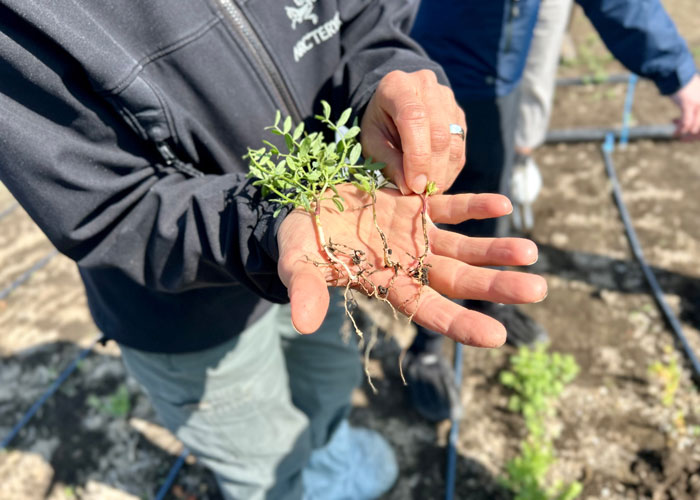
Beyond agronomics however, she’s also looking to make new varieties with appeal for end-use markets in terms of colours and shapes. For example, there’s a small, black variety in the works, as well as a purple one.
She says having a variety of options for farmers to grow, and markets to buy, is key to ramping up the potential of the crop.
“It can certainly become the next big pulse crop in Saskatchewan, in my opinion, and many people will agree with that.”
Being able to help diversify options for farmers and strengthen the industry overall is a point of pride for Vargas, who grew up on a small family farm in Central America, before going on to study at universities in Honduras and Puerto Rico. She believes her background has played a critical role in getting her to where she is today.
“I come from a farming family and my perspective will be always the farmer’s perspective, and I think that’s a beautiful opportunity to have in this job,” she said. “I will always consider my background beneficial.”
But her vast experience and education doesn’t mean she has nothing left to learn. In fact, she says the last year-and-a-half has been a major growth period for her professionally.
“There’s just an endless list of what I have learned,” she said, adding that one of the best parts of her job as an assistant professor in the College of Agriculture and Bioresources’ Department of Plant Sciences has been teaching the next generation of plant breeders.
“I’ve learned so much not only from my peers, but from my students. I think I have the luxury to have some of the best students that you could ever ask for.”
Going forward, Vargas plans to continue to support her students as they embark on their own careers and journeys, as well as the farmers that rely on the crops she’s breeding. And Vargas is grateful for the opportunities she’s been given to do so, especially at a time when there is so much potential for plant breeders to rapidly advance their work through new technology, and address increasingly important global concerns related to food security and climate change.
“My generation has the luxury to have learned the traditional ways of breeding and still be moving into rapid genomic development. So, I just feel really lucky to be living in this time.”